I still remember my first big parts order. In 2017, I approved a quote that was about 18% lower than the next one. Felt good for about a week. Then the parts didn't fit, the supplier blamed our specs, and the rework cost more than the savings. That is the moment I started thinking in total cost, not price.
I've been handling component orders for 8 years now, and I've documented 31 significant mistakes along the way—roughly $46,000 in wasted budget. That's not a brag; that's why I maintain our team's pre-purchase checklist.
This article compares two ways to buy auto parts. Option A: the cheapest first-order cost. Option B: the part that works with the system and comes with documentation. I'll use three real-world examples: brake pad glazing, head gasket replacement time, and an exhaust upgrade. Then I'll show you why the Zimmermann logo matters more than you might think.
Two Ways to Read This Article
Before the examples, here's the framework I use with every part order:
Total cost = part price + shipping + installation + rework risk + downtime.
A $35 brake pad can cost $400 if it wears unevenly and cooks a rotor. A $100 gasket can cost $2,500 if it fails and you have to do the job twice. A $70 exhaust part can cost hours of your weekend if the drone drives you crazy.
The comparison is simple: Option A is the cheapest quote. Option B is the component with the right specification and traceability. The difference is usually visible only later.
Brake Pad Glazing: Cheap Pads vs. Friction-Matched Pads
Brake pad glazing happens when the friction material gets hot enough that the resins melt and form a smooth, hard layer on the pad. The pad looks shiny, but it doesn't bite. You might notice longer stopping distances, a squeal, or a pedal that feels like it's on a slick surface.
I've caused this myself. In 2021, I installed a set of budget pads on a sedan before a mountain trip. They were a lot cheaper than the quality set, and they seemed fine in the city. After 20 minutes of descending, the pedal got weird. I checked the pads later: glazed, both front corners. That was $180 for new pads and rotor resurfacing, plus a day I didn't get back.
The comparison works like this:
- Budget pads: lower upfront cost, but the friction formula can glaze faster under heat.
- Quality street pads: higher price, but the material is designed for a wider temperature range.
To be fair, quality pads can glaze too if you skip the bedding-in process. New pads need a break-in cycle. (Should mention: if you don't follow that procedure, you can ruin a good pad and then blame the brand.)
So when you compare brake parts, don't just compare price per axle. Compare how the pad behaves when it gets hot. That's the total-cost calculation that actually matters.
How Long Does It Take to Replace a Head Gasket? It's a Labor Story
Let's answer the question directly. How long does it take to replace a head gasket? In my experience with common inline-4 engines, plan on 8 to 15 hours of labor. For a transverse V6 or a tight engine bay, it can run 16 to 25 hours. That doesn't include machine shop time if the cylinder head needs testing or decking. So expect one to three working days in a shop, plus the machine shop's own timeline.
Now compare a cheap head gasket set with a quality OEM-grade set.
The cheap set might save $50 at the counter. But the actual job cost is dominated by labor. If the gasket's sealing layer isn't consistent, or the head bolts stretch beyond spec, you get a repeat failure. Then you're paying the same labor again. A blown head gasket can also mix coolant and oil, which turns a $1,000 repair into a much bigger engine problem.
I still kick myself for approving a no-name gasket set on a sedan we were fixing up. The car came back three weeks later with white smoke. We caught it before catastrophic damage, but the redo cost more than the original quote would have been if we'd bought the better gasket the first time.
The phrase that stuck with me: the gasket is cheap. The labor isn't. If you're doing it yourself, do the math too. A DIY head gasket replacement might take two weekends, plus a friend, plus a torque wrench you need to buy. The total cost is more than the gasket kit in your cart.
The Dynomax Race Bullet Muffler Trade-Off
The Dynomax race bullet muffler is a compact, straight-through muffler. People use it in custom exhausts because it's lightweight, loud, and easy to weld into an existing system. I'm not going to tell you it's a bad product. I've used a race bullet on a track-only car, and it did exactly what I wanted.
The comparison here is between treating a muffler as an entire exhaust system and treating it as one component in a system.
If all you want is a louder car for the lowest cost, a race bullet plus some piping is probably a no-brainer. But in my experience, the total cost can get complicated:
- Driveability: straight-through mufflers flow well at high RPM, but they can shift the torque curve. Your daily stop-and-go might feel worse.
- Noise: a race bullet is race noise. It drones. I've seen more than one owner put the stock muffler back on after a week of highway driving.
- Compliance: depending on where you live, a loud exhaust might not pass inspection or track sound limits. That's a cost you don't think about at checkout.
So if you're choosing between a race bullet muffler and a properly tuned cat-back system, ask yourself: what is the system supposed to do? If the answer is just 'sound fast,' the race bullet wins. If the answer is 'keep the car useful on the street,' the engineered system is probably the better total cost.
That Zimmermann Logo Is More Than Decoration
The Zimmermann logo shows up on boxes, labels, and on the parts themselves. If you're buying Zimmermann auto parts, that logo is the first clue—not the last one.
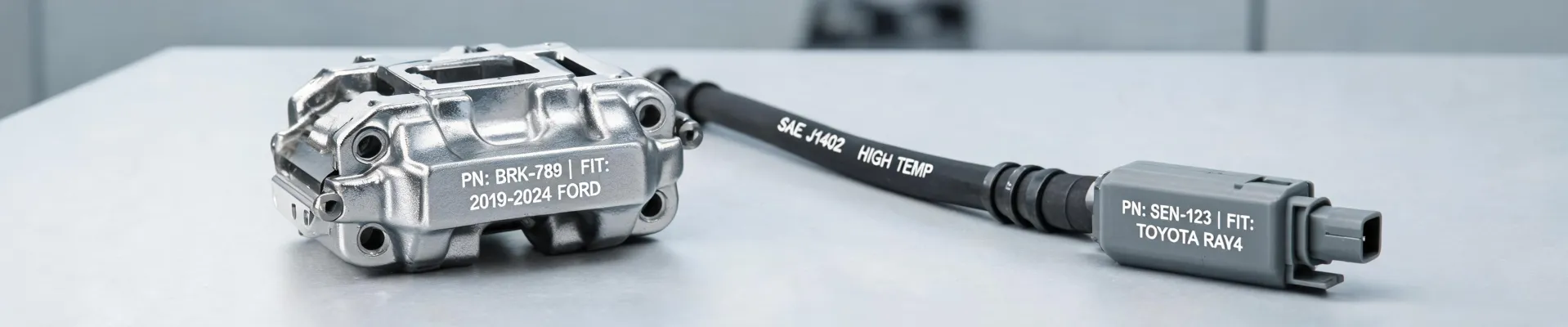
On many stamped components, we emboss or laser-mark the part number and logo into the steel. That mark has to survive the same heat, vibration, and salt as the part. A part with a crisp logo on the bag but no traceable mark on the steel is a red flag.
I still kick myself for a 2022 purchase. I ordered a batch of brackets because the photo showed a perfect Zimmermann logo. The parts arrived with labels that looked right, but the steel was soft and the bolt holes were off by about 1.2 mm. We reworked all 60 parts. That cost $900 and a lot of embarrassment.
What should you check? Start with the logo, but don't stop there. Ask for the batch number, material certificate, or any traceability document the supplier provides. A genuine part should come with a clear way to identify it.
If you're working with branded packaging or marketing materials, color accuracy is a separate topic. According to Pantone Color Matching System guidelines (Source: Pantone), brand-critical colors should target a Delta E of less than 2 for reliable reproduction. For a metal part, though, the mark in the steel matters more than the color on the box.
So Which Option Do I Choose?
It depends, and that's not a cop-out. The comparison depends on what you're optimizing for.
If you're building a weekend toy and only care about sound, the Dynomax race bullet muffler is a fine choice. If the car has to be useful on a 100-mile highway commute, it's probably not.
If you're a shop stocking pads for daily drivers, choose a pad with the right temperature range. A pad that won't glaze in normal driving is worth more than a brand name—though a trusted brand helps.
If you're quoting a head gasket job, focus on labor and inspection time. The gasket set is not where you should save the last $40.
And if you're sourcing Zimmermann auto parts, verify the logo and the production trace. The logo is a starting point, not a promise.
Even after I started choosing the higher-cost option, I kept second-guessing. What if I was paying for a logo? The two weeks until the first pilot run were stressful. Then the parts fit, the process worked, and the customer didn't call back. That's when I relaxed.
My experience is based on about 300 part orders, mostly European and Japanese passenger platforms. If you're in heavy trucks, marine, or aerospace, your requirements might differ. But the total-cost question is the same.
The bottom line: the cheapest part is rarely the lowest-cost part. The part that fits, lasts, and can be traced is usually the one that keeps the lights on.

Jane Smith
I’m Jane Smith, a senior content writer with over 15 years of experience in the packaging and printing industry. I specialize in writing about the latest trends, technologies, and best practices in packaging design, sustainability, and printing techniques. My goal is to help businesses understand complex printing processes and design solutions that enhance both product packaging and brand visibility.